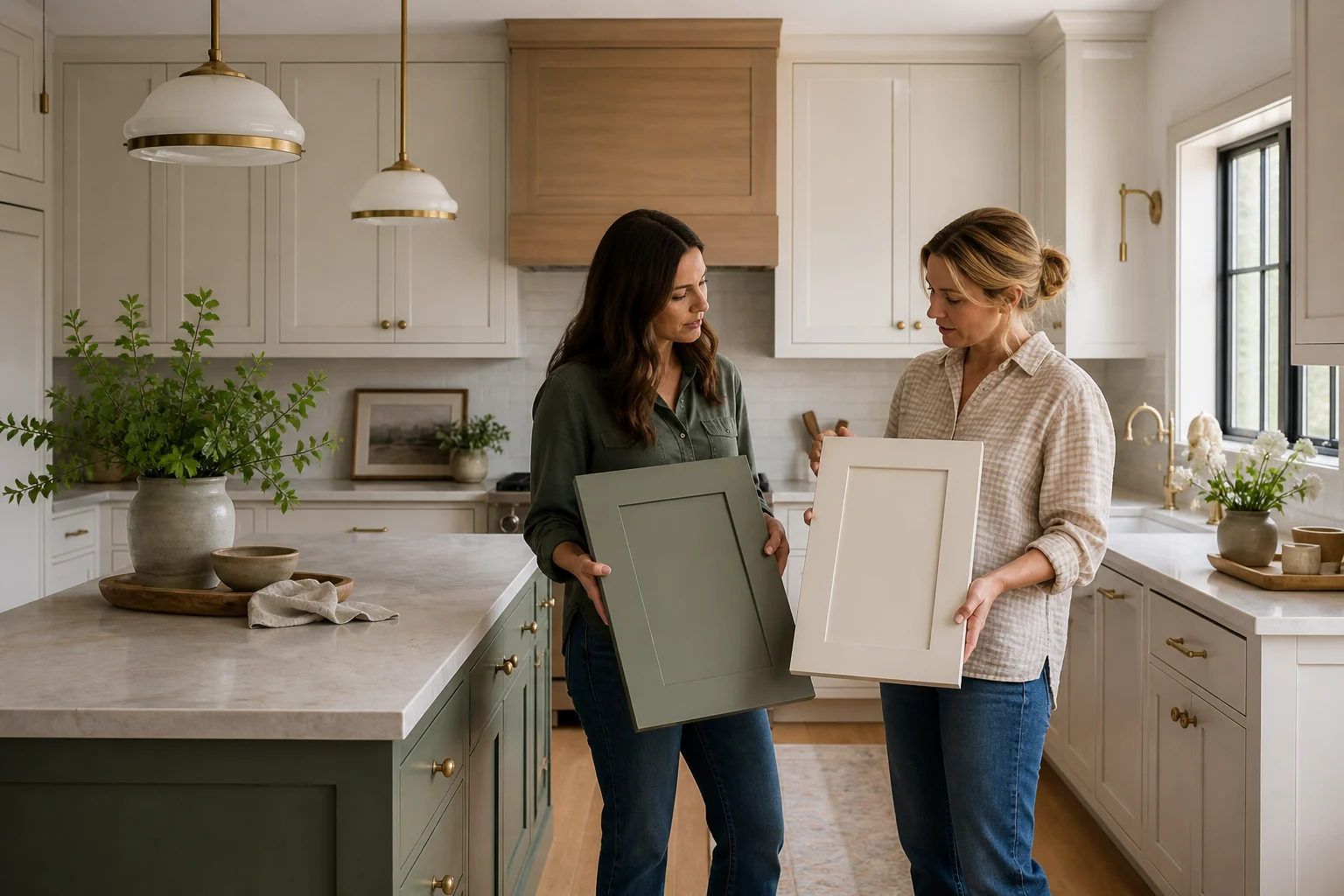
Give the color a boundary
An island, complete pantry wall or run of base cabinets gives the second finish a legible architectural boundary. Changing colors in the middle of an unrelated run can feel like a substitution.
Use the darker or more expressive finish where it helps anchor the room, then allow the quieter finish to connect larger surfaces.
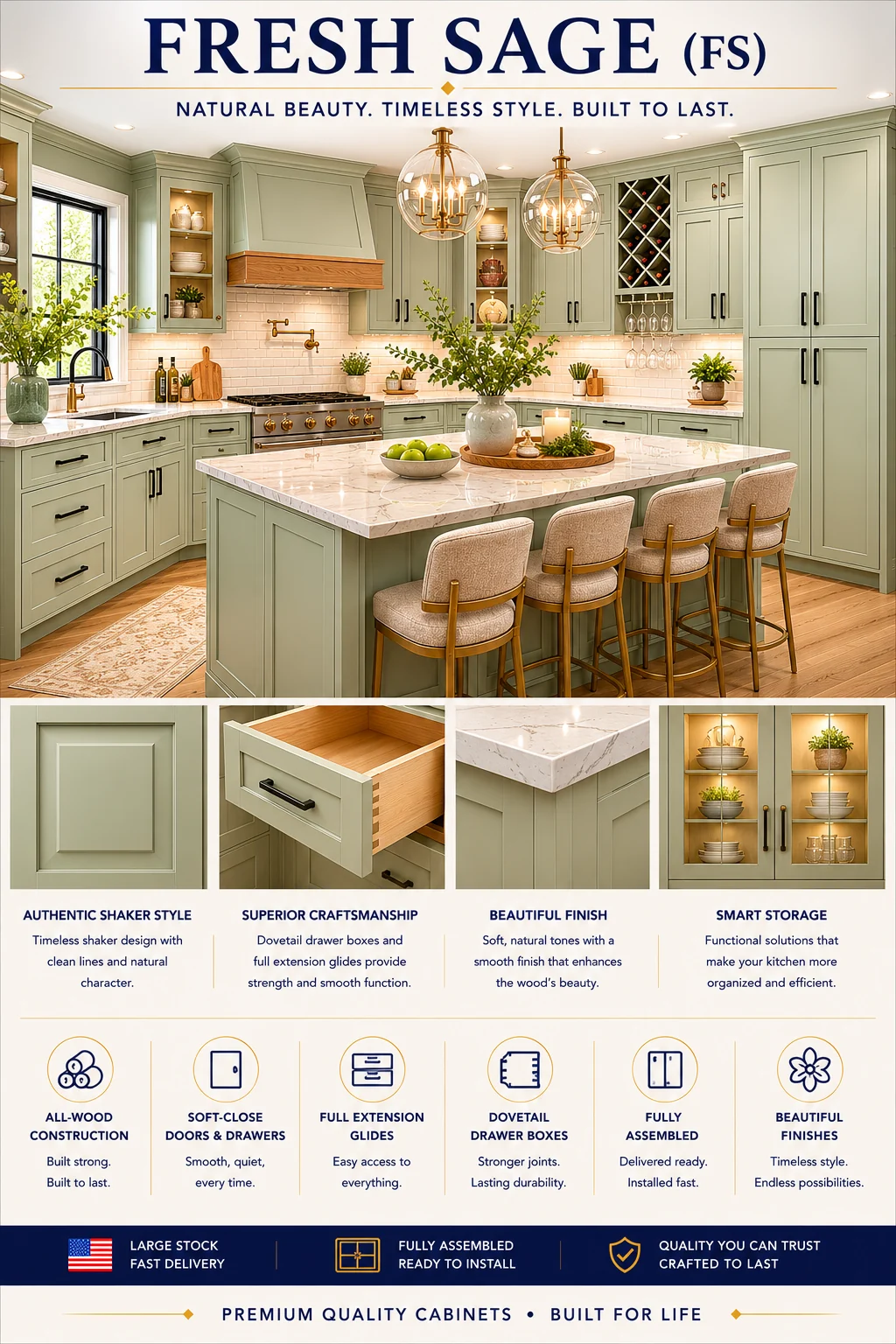
Undertones matter more than names
Compare door samples vertically beside flooring, counters and backsplash material in the actual room. A warm cream, cool white and muted sage may shift dramatically between morning daylight and evening bulbs.
Natural wood counts as a strong color and texture. Let it be one of the principal finishes instead of adding it as a third competing idea.
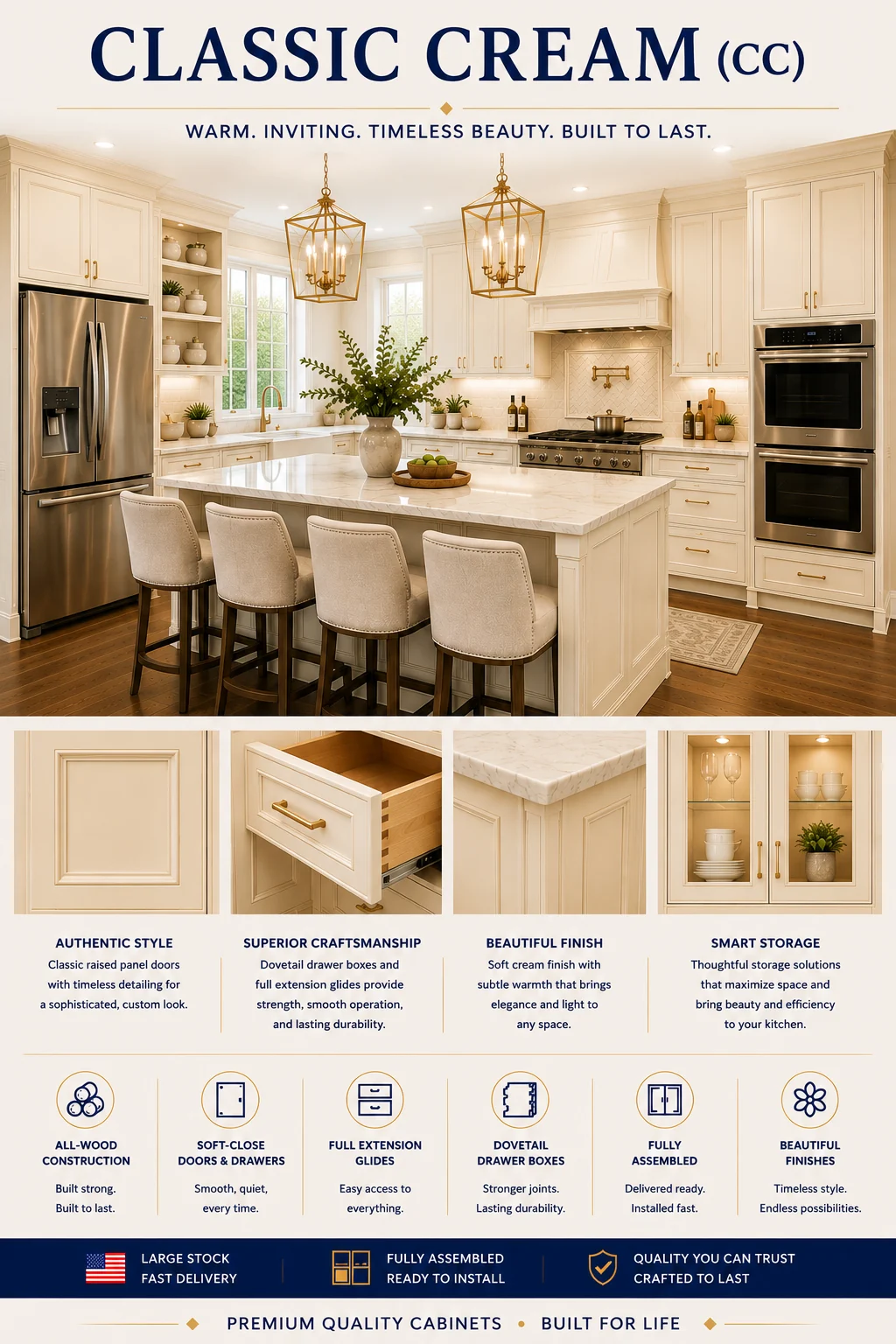
Repeat without matching everything
Echo the accent finish once or twice through stools, a hood detail, shelving or nearby furniture. Avoid trying to match every green, white or wood tone exactly.
Keep door profiles and hardware disciplined so the palette remains the feature rather than one of many unrelated changes.